One of my favorite things about the French wine industry is the use of controlled designations of origin. Not only does the AOP/AOC system guarantee the source of the grapes, but also the grape cultivars themselves. When you buy a bottle of Gevrey Chambertin you know it is made from Pinot noir. When you buy a bottle of Sancerre you know it is Sauvignon blanc. This system is great for providing a plethora of information to a savvy customer by only using a geographic on a label. This system is also great for stifling producer creativity. You will never find a bottle of Bordeaux made with Syrah. Ah, Château Palmer's Historical XIX Century Wine is an exception to that rule, you say! Yes, but this blend of Bordeaux and Syrah from the northern Rhône Valley is labeled as Vin de Table Français, or lowly French Table Wine. Though it occasionally happens, French wine producers produce wine from restricted cultivars, or by restricted methods, and then label the wine with the less prestigious Vin de Table Français designation.

A website devoted to Colorado Wine and beyond.
Showing posts with label France. Show all posts
Showing posts with label France. Show all posts
Wednesday, February 3, 2016

Thursday, January 14, 2016
Beatrice's Blushes: Clos Cibonne Cuvée Tradition Rosé
Last month, a thread over on Wineberserkers.com about restaurant regulations people would like to see drifted into a somewhat contentious discussion revolving around banning children from restaurants. Yes, I understand crying children can be annoying to other diners, but the idea of excluding young diners from fine dining establishments is just silly. I've dined within earshot of more annoying fully grown adults than children. Our four-year-old son loves to eat seared scallop with a leek emulsion just as much as he enjoys McDonald's hamburgers. Beatrice isn't quite up to eating solid foods yet, but she has also tagged along with us to two of Denver's nicer restaurants (JaJa Bistro and Fruition) already in her first few weeks. Both times she remained quietly asleep in her carseat (and Ben was with grandparents). I don't know how the restaurant felt about Bea taking up a chair that could have seated a paying customer, but the staff at both restaurants was kind, courteous, and wanted to see the baby. If they were of a child-banishment mindset they certainly hid it well.
Tuesday, February 17, 2015
Union des Grands Crus de Bordeaux 2012 tasting and what will Premiere Napa Valley bring this weekend?
As I noted a few weeks ago, The Union des Grands Crus de Bordeaux (UGCB) was in Denver showing off the 2012 vintage. Though the organization represents 133 wineries, both classified and non-classified producers, only about 60 producers were in Denver at the fundraising event for the Denver Public Schools Foundation, with the rest of the group splitting off to Las Vegas. Just tasting the wine from these 60 was more than enough to gain some perspective on the 2012 vintage.
As you probably have read, Bordeaux had three less-than-stellar vintages in a row. 2011, 2012 and 2013 have been met with critical disdain and falling prices, especially since the esteemed 2009 and 2010 vintages caused prices to skyrocket. Of the producers I spoke with, they claimed that 2012 was the best of these three off years and certainly meant for early consumption while the venerated vintages rest in the cellar. 2014 was discussed as a favorable vintage and a welcome reprieve from the trio of disappointments, but still not up to the standard set by 2010 - the greatest ever vintage in Bordeaux, as claimed by one producer.
I left the tasting with three conclusions about the wines.
As you probably have read, Bordeaux had three less-than-stellar vintages in a row. 2011, 2012 and 2013 have been met with critical disdain and falling prices, especially since the esteemed 2009 and 2010 vintages caused prices to skyrocket. Of the producers I spoke with, they claimed that 2012 was the best of these three off years and certainly meant for early consumption while the venerated vintages rest in the cellar. 2014 was discussed as a favorable vintage and a welcome reprieve from the trio of disappointments, but still not up to the standard set by 2010 - the greatest ever vintage in Bordeaux, as claimed by one producer.
I left the tasting with three conclusions about the wines.
Monday, January 26, 2015
Union des Grands Crus de Bordeaux is in Denver this week
The Union des Grands Crus de Bordeaux (UGCB) is an organization formed in 1973 by a group of Bordeaux wineries that is something of a marketing program that puts on tasting and educational events in France and abroad. The organization now represents 133 wineries, both classified and non-classified producers. Every year, winery representatives tour the U.S. with their wines, but usually only visit New York, San Francisco and Los Angeles. Last year was the first time the tour found its way to Colorado.

This year, half of the group will be in Denver on Thursday, January 29 (the the other half is in Las Vegas that night). The Châteaux owners and winemakers from over 60 of the most prestigious Bordeaux producers (sadly, no First Growths...) will pour and discuss their wines. I can't think of another opportunity in Colorado to taste such a collection of historic and respected wines. As an added benefit (and because of Colorado liquor law) the event is a fundraiser for the Denver Public Schools Foundation, but hosted by Applejack Wine & Spirits. For a full list of the participating producers and to buy tickets, click here.
The 2012 vintage will be featured at the tasting, though I would hope some producers bring some examples properly aged Bordeaux wine. 2012 is the second in a trio of less-than-ideal vintages for Bordeaux. The vintage started cool and wet, and finished with heavy rains around harvest time. Though I haven't tasted much 2012 Bordeaux, I've read that merlot from the Right Bank produced more favorable wines when compared to the later-ripening cabernet sauvignon from the Left Bank. Many of the top sweet-wine producers even declared that they would not produce any wine in 2012, but instead sell-off their wine in bulk to less prominent producers.
I don't drink much Bordeaux, frankly because the price of admission is so steep. Many of the wines that will be poured at the UGCB tasting cost between $50 and $300 per bottle. The First Growth producers, who will not be in attendance, sell their wines for around $1000 per bottle. Prices have come down some since consumer demand (especially in China) of the heralded 2009 and 2010 vintages caused prices to skyrocket. Still, with three lower-quality vintages currently languishing in the market since the critically acclaimed 2010, supply and demand are still out of sync when it comes to general pricing for the region. Nevertheless, I will be quite interested to see what is in the glass on Thursday night to see if there is some value to be had. I hope to see you there!
This year, half of the group will be in Denver on Thursday, January 29 (the the other half is in Las Vegas that night). The Châteaux owners and winemakers from over 60 of the most prestigious Bordeaux producers (sadly, no First Growths...) will pour and discuss their wines. I can't think of another opportunity in Colorado to taste such a collection of historic and respected wines. As an added benefit (and because of Colorado liquor law) the event is a fundraiser for the Denver Public Schools Foundation, but hosted by Applejack Wine & Spirits. For a full list of the participating producers and to buy tickets, click here.
The 2012 vintage will be featured at the tasting, though I would hope some producers bring some examples properly aged Bordeaux wine. 2012 is the second in a trio of less-than-ideal vintages for Bordeaux. The vintage started cool and wet, and finished with heavy rains around harvest time. Though I haven't tasted much 2012 Bordeaux, I've read that merlot from the Right Bank produced more favorable wines when compared to the later-ripening cabernet sauvignon from the Left Bank. Many of the top sweet-wine producers even declared that they would not produce any wine in 2012, but instead sell-off their wine in bulk to less prominent producers.
I don't drink much Bordeaux, frankly because the price of admission is so steep. Many of the wines that will be poured at the UGCB tasting cost between $50 and $300 per bottle. The First Growth producers, who will not be in attendance, sell their wines for around $1000 per bottle. Prices have come down some since consumer demand (especially in China) of the heralded 2009 and 2010 vintages caused prices to skyrocket. Still, with three lower-quality vintages currently languishing in the market since the critically acclaimed 2010, supply and demand are still out of sync when it comes to general pricing for the region. Nevertheless, I will be quite interested to see what is in the glass on Thursday night to see if there is some value to be had. I hope to see you there!
Wednesday, January 21, 2015
Ben's Blush: Domaine de Nizas
Well, the weekly rosé review lasted all of one week. To be fair, we actually did drink a bottle of rosé two weeks ago, but I just was too lazy busy to write it up. Last week I was in Grand Junction, CO for the annual viticulture and enology conference: VinCO. It is great that the Colorado Association for Viticulture and Enology puts together a program that runs the gamut of marketing, winemaking, grape growing, and directed tasting seminars for the Colorado wine industry. I co-led a tasting of syrah from around the world that seemed to go over well. I also tasted some very nice wines from Maryland, Virginia, Washington, and of course Colorado.
Traveling and being away from home has both its advantages and disadvantages. Sleeping in a King-size bed by yourself can be quite relaxing, but it is more fun to be woken up by a little boy who dressed himself and says, "Look at my awesome outfit!" I didn't have to go the whole week without seeing Ben; the iPhone is a modern miracle! I can't imagine traveling before the days of Skype and Facetime. It is such a luxury to be able to see and talk to you children from afar. I know that Ben enjoys being able to talk with his grandparents and great grandparents via Facetime. I guess it kind of is like being Back to the Future (without the firing). I don't travel too often, but when I do it is nice to be close digitally.
2013 Domaine de Nizas
To catch up from the missing week, I will be posting two blush reviews this week (this week's tomorrow). The wine from the week before last hails from the Languedoc region of Southeast France. I don't know why, but for some reason every time I look at the label I think it is from Greece. Notwithstanding what my brain keeps insisting, this French wine is a blend of 40% syrah, 40% grenache noir, and 20% mourvèdre, which is quite typical for Languedoc rosés. It is a beautiful poppy pink color. Flowers and strawberries are the most noticeable aromas. It is a bit more structured than the delicate nose would suggest. Red fruit flavors are complemented by spicy hints of anise. Overall, the wine was pretty average and did nothing to excite me, but was still a nice wine. 14% abv. Sample $17. Average
Traveling and being away from home has both its advantages and disadvantages. Sleeping in a King-size bed by yourself can be quite relaxing, but it is more fun to be woken up by a little boy who dressed himself and says, "Look at my awesome outfit!" I didn't have to go the whole week without seeing Ben; the iPhone is a modern miracle! I can't imagine traveling before the days of Skype and Facetime. It is such a luxury to be able to see and talk to you children from afar. I know that Ben enjoys being able to talk with his grandparents and great grandparents via Facetime. I guess it kind of is like being Back to the Future (without the firing). I don't travel too often, but when I do it is nice to be close digitally.
2013 Domaine de Nizas
 |
| Domaine de Nizas 2013 Rosé |
To catch up from the missing week, I will be posting two blush reviews this week (this week's tomorrow). The wine from the week before last hails from the Languedoc region of Southeast France. I don't know why, but for some reason every time I look at the label I think it is from Greece. Notwithstanding what my brain keeps insisting, this French wine is a blend of 40% syrah, 40% grenache noir, and 20% mourvèdre, which is quite typical for Languedoc rosés. It is a beautiful poppy pink color. Flowers and strawberries are the most noticeable aromas. It is a bit more structured than the delicate nose would suggest. Red fruit flavors are complemented by spicy hints of anise. Overall, the wine was pretty average and did nothing to excite me, but was still a nice wine. 14% abv. Sample $17. Average
Monday, April 16, 2012
Ben's Bubbly: Wrap-Up
 |
| Ben - 1 year |
During this adventure, we drank 54 different sparkling wines (doubling up Mother's Day week and Valentine's Day) from 11 different countries. Here are a few statistics from this little endeavor:
Monday, February 20, 2012
Ben's Bubbly: Kirkland Champange
It is amazing how much can change in a week. Last week, Ben was beginning to take a few "independent" steps here and there. Now, the child is walking across the house. In fact, he is now walking as often as he crawls. If he can pull himself up on something, he will then use his feet to stumble like a drunk cowboy around the house. However, if he really wants to get somewhere fast he'll plop down and crawl with a vengeance. Despite having a low-grade fever, a leaky nose and a cough for the past few days, he is being a trooper during the day. The nights are a different story, unfortunately. One of these days, I am confident we will sleep through the night again.
Kirkland Signature Champagne, Brut
 For those of you that don't know, Kirkland Signature is Costco's store brand. Now, of course Costco does not make Champagne, but has the wine privately labeled by an actual Champagne house; Janisson et Fils. With the current hype surrounding Grower Champagne, most consumers only know that the label codes RM and NM differentiate between Récoltant manipulant (farmer fizz) and Négociant manipulant (larger houses). Little do most Champagne consumers know that there are five other producer designations found on bottles. In the case of the Kirkland bubbly, it is designated as Marque auxiliaire (MA), which is a brand that is unrelated to the actual producer, such as Kirkland Signature. I doubt that you will see this designation much in the U.S., though you might find it more often if you were shopping at a supermarket in France.
It is darker than most other bubblies that we have poured over the past 46 weeks. It is a pretty amber color with medium-sized bubbles. The nose is a bit muted, but with a little citrus fruit. I was quite surprised that this wine showed so much tart grapefruit flavors along with a slight nuttiness. It was so tart that it wasn't all that pleasant on its own, but a bit of food made it a bit better. You can't beat this price for true Champagne, but unfortunately it doesn't come with the quality you would expect from Champagne. I you just can't stand non-Champagne bubbly, but can't stand the prices of good Champagne this might be a wine for you. 12% abv Purchased $20 Average/Good
Kirkland Signature Champagne, Brut
 For those of you that don't know, Kirkland Signature is Costco's store brand. Now, of course Costco does not make Champagne, but has the wine privately labeled by an actual Champagne house; Janisson et Fils. With the current hype surrounding Grower Champagne, most consumers only know that the label codes RM and NM differentiate between Récoltant manipulant (farmer fizz) and Négociant manipulant (larger houses). Little do most Champagne consumers know that there are five other producer designations found on bottles. In the case of the Kirkland bubbly, it is designated as Marque auxiliaire (MA), which is a brand that is unrelated to the actual producer, such as Kirkland Signature. I doubt that you will see this designation much in the U.S., though you might find it more often if you were shopping at a supermarket in France.
It is darker than most other bubblies that we have poured over the past 46 weeks. It is a pretty amber color with medium-sized bubbles. The nose is a bit muted, but with a little citrus fruit. I was quite surprised that this wine showed so much tart grapefruit flavors along with a slight nuttiness. It was so tart that it wasn't all that pleasant on its own, but a bit of food made it a bit better. You can't beat this price for true Champagne, but unfortunately it doesn't come with the quality you would expect from Champagne. I you just can't stand non-Champagne bubbly, but can't stand the prices of good Champagne this might be a wine for you. 12% abv Purchased $20 Average/Good
Monday, January 30, 2012
Ben's Bubbly: Perrier-Jouët
Last week was rough; Ben came down with a fever at school and got sent home. I hung out with him the next day since he couldn't go back for 24 hours. I rearranged my scheduled (and by rearrange I mean I stayed home and attended a meeting that I had via Google+ Hangout) to care for the ill one. He took a super long nap that coincided perfectly with my work meeting. One side effect of his long morning naps (he's had a few this week when he's been home with me) is that he doesn't take an afternoon nap. I enjoy the extra time hanging out with him, but I think I am really going to miss the extra afternoon hours of being able to get work done. C'est la vie.
Champagne Perrier-Jouët Grand Brut

Back to Champagne we go this week. When people talk about how rare Champagne is, they don't know what they're talking about. Perrier-Jouët is a large négociant from Épernay that produces twice as much wine annually as the entire state of Colorado. So, this one winery is twice as big as one hundred Colorado wineries put together. Think about that. Most Champagne is produced in this industrial fashion, and to Terry Theise, I'm surprised it is as good as it is being an industrial product. I have nothing against Perrier-Jouët, they make perfectly palatable wine. Their Belle Epoque (often called the flower bottle) is highly sought by Champagne aficionados. The Grand Brut is their basic non-vintage cuvée. The label is imprinted with the flowers of its more famous relative and is quite eye catching. The first thing I notice on the nose is loads of red fruit. Apples, raspberries and even strawberries intrigue even before the first sip. Once you get the glass to your mouth, the acidity slaps you back in your seat. The yeasty flavors are more apparent on the palate, but the fruit is still there. Who ever says Champagne isn't a food wine is also wrong. This wine needs food to help tone down the almost too tart acids. You won't spend a lot of time contemplating this wine, but it was a nice accompaniment to dinner. 12% abv Purchased $26 Good
Champagne Perrier-Jouët Grand Brut

Back to Champagne we go this week. When people talk about how rare Champagne is, they don't know what they're talking about. Perrier-Jouët is a large négociant from Épernay that produces twice as much wine annually as the entire state of Colorado. So, this one winery is twice as big as one hundred Colorado wineries put together. Think about that. Most Champagne is produced in this industrial fashion, and to Terry Theise, I'm surprised it is as good as it is being an industrial product. I have nothing against Perrier-Jouët, they make perfectly palatable wine. Their Belle Epoque (often called the flower bottle) is highly sought by Champagne aficionados. The Grand Brut is their basic non-vintage cuvée. The label is imprinted with the flowers of its more famous relative and is quite eye catching. The first thing I notice on the nose is loads of red fruit. Apples, raspberries and even strawberries intrigue even before the first sip. Once you get the glass to your mouth, the acidity slaps you back in your seat. The yeasty flavors are more apparent on the palate, but the fruit is still there. Who ever says Champagne isn't a food wine is also wrong. This wine needs food to help tone down the almost too tart acids. You won't spend a lot of time contemplating this wine, but it was a nice accompaniment to dinner. 12% abv Purchased $26 Good
Friday, January 27, 2012
Who says Colorado doesn't produce some of the world's best wine?
Colorado makes some damn good wine. However, one of the biggest issues many people have with Colorado wine is the word "Colorado" on the label. Sure, some of the fun of drinking certain wines is what is on the label, but if you eliminate preconceived notions about the region by hiding the label, I am quite confident that Colorado's best wines can compete with the world's best wines. I've done it time and time again. And I will continue to do so to prove my point. However, even the blind tasting I am sharing with you now surprised me.
A few months ago, my tasting group decided on 2003 Bordeaux as our next theme. Bordeaux produces perhaps the best known and most sought after wines (both red and white) in the world. Bordeaux is a large and complex region, but to simplify things, it is often thought of in two terms: the Left Bank and the Right Bank. The banks refer to the side of the Gironde estuary (where the Garonne and Dordogne rivers merge) on which the vineyards lie. Wines from the Right Bank are generally velvety merlot-based wines. The Left Bank wines are made mostly from cabernet sauvignon and considered by many to be more structured, long aged and generally more prestigious. They are so highly regarded that in 1855, the merchants of Bordeaux classified the châteaux of the Left Bank into a five tier hierarchy based on quality and price that remains little changed to this day. At the top are the First Growths that command hundreds, if not thousands of dollars per bottle. A total of only 61 Bordeaux châteaux of nearly 10,000 are now a part of this classification. These classified Bordeaux châteaux are the yardstick by which all other cabernet sauvignon are measured. I thought that this would be a great opportunity to see how Colorado wine at its best compares with the top wines in the world.
The lineup did not include any of the super expensive First Growths, but it did have some pretty big names from the Left Bank (and the vintage wasn't too shabby either). Everyone gathered at our new house and brown bagged 7 bottles of classified Bordeaux, plus a few ringers to keep us honest. No one knew all of the wines in the lineup, but we knew many of the names that were hidden from view. Paired with a top sirloin steak and a round eye roast, we had a grand time tasting through the flight. Only one bottle disappointed (and even that was contentious, but more on that later), and a few surprised when the labels were revealed. After the Bordeaux flight, a generous guest opened two other big red gems and then we sipped on a variety of dessert wines. Overall, it was quite a night!
The Bordeaux-themed flight included ten wines ranging in price from $30-$300 and were from Bordeaux, Napa Valley, Washington and, of course, Colorado. The tasting notes are mine, and I will note my ranking of the wines as well as the group's.
Wine 1: This shows a little bit of volatile acidity and is a bit funky. Some nice cigar box and cherries are on the nose. Flavors of sour cherry and green olive are most prominent, but overall this one is rather light and fades quickly. My least favorite if you don't count the corked bottle. Average
Wine 2: This is a big wine. Lots of dark fruit, cassis, and tobacco. Nice, but does not stand out as special. Good/Very Good
Wine 3: Another big wine. Red fruit and leather on the nose lead to molasses, spices, dark fruits and smooth tannins on the palate. This is a thick and aggressive wine that is probably still young. Very Good/Excellent
Wine 4: Wow. Loads of fruit on both the nose and mouth. This thing is complex. Fruit, violets and vanilla keep lingering on the long finish. This was the first wine I went back to revisit. My wine of the night. Excellent/Outstanding
Wine 5: Another lovely wine. This is the first to be a bit green and have a slightly metallic nose, but the smooth tannins, typical cab flavors of currant and tobacco and exceptionally long finish make this one to remember. Not as fruity as the others, but still a typical Bordeaux. My number two of the night. Excellent
Wine 6: This wine is full of pepper and smoke. It is a lot lighter on the palate than the others. Unfortunately, it falls apart in the mouth way too quickly. Good
Wine 7: Back to the good stuff. Lots of red and black fruits are on both the nose and palate, but this is the first to show nice herbs of sage and tea. It goes down very smooth. Not too complex, but a very nice wine. My third choice of the night. Very Good/Excellent
Wine 8: The first thing I notice is the alcohol. It tastes very New World; like a buttery blackberry liqueur. Decent, but a bit too much for me at this point. Good/Very Good
Wine 9: Corked. Offensive nose and TCA is the first thing that comes to mind for me. The group had a discussion and several people were adamant that it wasn't corked, just a bit bretty. It tastes better than it smells, but still shows only earth, leather, mushrooms and no fruit. My least favorite, but I still stand by my assessment of it being corked. NR
Wine 10: This is a big fruity lollipop. It is thin, simple and slightly metallic, but fun to drink. Nothing special. Good
Top Wines of the Night as voted by the group:
#1: Wine 5 (5 first place votes, 1 second)
#2: Wine 4 (3 first place votes, 1 second, 1 third)
#3: Wine 3 (1 first place vote, 3 third)
Find out the identities after the jump...
A few months ago, my tasting group decided on 2003 Bordeaux as our next theme. Bordeaux produces perhaps the best known and most sought after wines (both red and white) in the world. Bordeaux is a large and complex region, but to simplify things, it is often thought of in two terms: the Left Bank and the Right Bank. The banks refer to the side of the Gironde estuary (where the Garonne and Dordogne rivers merge) on which the vineyards lie. Wines from the Right Bank are generally velvety merlot-based wines. The Left Bank wines are made mostly from cabernet sauvignon and considered by many to be more structured, long aged and generally more prestigious. They are so highly regarded that in 1855, the merchants of Bordeaux classified the châteaux of the Left Bank into a five tier hierarchy based on quality and price that remains little changed to this day. At the top are the First Growths that command hundreds, if not thousands of dollars per bottle. A total of only 61 Bordeaux châteaux of nearly 10,000 are now a part of this classification. These classified Bordeaux châteaux are the yardstick by which all other cabernet sauvignon are measured. I thought that this would be a great opportunity to see how Colorado wine at its best compares with the top wines in the world.
The lineup did not include any of the super expensive First Growths, but it did have some pretty big names from the Left Bank (and the vintage wasn't too shabby either). Everyone gathered at our new house and brown bagged 7 bottles of classified Bordeaux, plus a few ringers to keep us honest. No one knew all of the wines in the lineup, but we knew many of the names that were hidden from view. Paired with a top sirloin steak and a round eye roast, we had a grand time tasting through the flight. Only one bottle disappointed (and even that was contentious, but more on that later), and a few surprised when the labels were revealed. After the Bordeaux flight, a generous guest opened two other big red gems and then we sipped on a variety of dessert wines. Overall, it was quite a night!
The Bordeaux-themed flight included ten wines ranging in price from $30-$300 and were from Bordeaux, Napa Valley, Washington and, of course, Colorado. The tasting notes are mine, and I will note my ranking of the wines as well as the group's.
Wine 1: This shows a little bit of volatile acidity and is a bit funky. Some nice cigar box and cherries are on the nose. Flavors of sour cherry and green olive are most prominent, but overall this one is rather light and fades quickly. My least favorite if you don't count the corked bottle. Average
Wine 2: This is a big wine. Lots of dark fruit, cassis, and tobacco. Nice, but does not stand out as special. Good/Very Good
Wine 3: Another big wine. Red fruit and leather on the nose lead to molasses, spices, dark fruits and smooth tannins on the palate. This is a thick and aggressive wine that is probably still young. Very Good/Excellent
Wine 4: Wow. Loads of fruit on both the nose and mouth. This thing is complex. Fruit, violets and vanilla keep lingering on the long finish. This was the first wine I went back to revisit. My wine of the night. Excellent/Outstanding
Wine 5: Another lovely wine. This is the first to be a bit green and have a slightly metallic nose, but the smooth tannins, typical cab flavors of currant and tobacco and exceptionally long finish make this one to remember. Not as fruity as the others, but still a typical Bordeaux. My number two of the night. Excellent
Wine 6: This wine is full of pepper and smoke. It is a lot lighter on the palate than the others. Unfortunately, it falls apart in the mouth way too quickly. Good
Wine 7: Back to the good stuff. Lots of red and black fruits are on both the nose and palate, but this is the first to show nice herbs of sage and tea. It goes down very smooth. Not too complex, but a very nice wine. My third choice of the night. Very Good/Excellent
Wine 8: The first thing I notice is the alcohol. It tastes very New World; like a buttery blackberry liqueur. Decent, but a bit too much for me at this point. Good/Very Good
Wine 9: Corked. Offensive nose and TCA is the first thing that comes to mind for me. The group had a discussion and several people were adamant that it wasn't corked, just a bit bretty. It tastes better than it smells, but still shows only earth, leather, mushrooms and no fruit. My least favorite, but I still stand by my assessment of it being corked. NR
Wine 10: This is a big fruity lollipop. It is thin, simple and slightly metallic, but fun to drink. Nothing special. Good
Top Wines of the Night as voted by the group:
#1: Wine 5 (5 first place votes, 1 second)
#2: Wine 4 (3 first place votes, 1 second, 1 third)
#3: Wine 3 (1 first place vote, 3 third)
Find out the identities after the jump...
Monday, December 19, 2011
Ben's Bubbly: Domaine le Capitaine Vouvray Methode Traditionelle Brut
Ben just keeps getting cuter each week. One of his new things is sharing. He loves offering his Cheerios or water bottle to us as we feed him. He gets super excited when we gladly accept his goodies. One of his new food goodies is tofu. We dice up the tofu into pea-sized cubes and dust them with crumbled Cheerios to make them easier to grab. While he enjoys eating the tofu, he also loves throwing it and smashing it on his high chair tray. He is really enjoying feeding himself and often ends up with the spoon in one hand and food from ear to ear and hair to chin.
 Domaine le Capitaine Vouvray, Methode Traditionelle Brut
Yes, France makes sparkling wine outside of the Champagne region. This sparkling Vouvray is made from 100% chenin blanc (as is all Vouvray, still or sparkling). This wine is a lovely golden color and has fine bubbles. The nose is a bit richer than Champagne with notes of honey, baked pear, and orange blossom. The flavors are equally unique. The minerality and acidity combine to yield a pleasant saltiness, along with flavors of rye bread and orange marmalade. This is not going to be confused with top-notch bubbly, but at a fraction of the price it is a tasty alternative.12.5% abv Purchased $16 Good

Yes, France makes sparkling wine outside of the Champagne region. This sparkling Vouvray is made from 100% chenin blanc (as is all Vouvray, still or sparkling). This wine is a lovely golden color and has fine bubbles. The nose is a bit richer than Champagne with notes of honey, baked pear, and orange blossom. The flavors are equally unique. The minerality and acidity combine to yield a pleasant saltiness, along with flavors of rye bread and orange marmalade. This is not going to be confused with top-notch bubbly, but at a fraction of the price it is a tasty alternative.12.5% abv Purchased $16 Good
Tuesday, December 13, 2011
Nothing beats Champagne for sparkling wine
It is that time of year again when all of the newspapers start publishing their Champagne stories in time for the New Year celebrations. Both the New York Times and San Francisco Chronicle have gotten in on the action. The NYT piece focused on how the big négociants (they buy grapes from independent growers) are dealing with the push for terroir-driven wine, whereas the Chronicle described how grower-producers have gained ground in the Champagne conversation. Several weeks ago, I was lucky enough to attend a tasting of importer Terry Theise's grower-producer Champagne selections. I think these wines offer some of the best value (not necessarily inexpensive) for sparkling wine from around the world, and I wanted to share the highlights of this tasting with you.
There is a lot of sparkling wine in the world. Unfortunately, only a small portion of it is Champagne. Champagne is sparkling wine from the Champagne region in northeast France. True Champagne is made predominantly from three grapes (chardonnay, pinot noir and pinot meunier) though up to seven cultivars are permissible (more on that later). Sparkling wine from other regions can be made from any number of grapes, and while the style may be similar to Champagne, it is not Champagne. If you're drinking sparkling wine from Germany, it is called Sekt, Spanish bubbly is called Cava, and the most predominant Italian sparkling wine is called Prosecco. Even in other French regions, the term Champagne may not be used. One of the main reasons for the seemingly strict semantics is terroir. Champagne's distinctive natural characteristics are based on its exceptionally northerly location (it is France's most northern viticultural area) and its location in a geologic formation known as the Paris Basin. Here, the grapes take root in Cretaceous chalk, which is key to true Champagne. While the method of production may be duplicated elsewhere, the terroir is unique.
Despite this uniqueness, there is an increasing dichotomy of Champagne. Most of the Champagne that you and I see on retail shelves or on restaurant wine lists is dominated by a few brands. The big luxury négociants produce millions of bottles of wine each year in an industrial process that rivals the biggest wine factories of Modesto, California. These négociants own very little of the vineyards and buy most of their grapes from grape growers and blend grapes from all over the region. Only 3.8% of the Champagne sold in the United States is made by small growers that handcraft their Champagne from individual vineyards and villages. Terry Theise is one of the main U.S. importers of this "farmer fizz," and sells some of the best Champagne that money can buy. After tasting over 50 different wines, I found 6 that should be purchased when spotted on store shelves. I used to think that most bubbly was the same (and still do to some extent), but these 6 wines are well worth their cost and will open your eyes to what Champagne really means.
There is a lot of sparkling wine in the world. Unfortunately, only a small portion of it is Champagne. Champagne is sparkling wine from the Champagne region in northeast France. True Champagne is made predominantly from three grapes (chardonnay, pinot noir and pinot meunier) though up to seven cultivars are permissible (more on that later). Sparkling wine from other regions can be made from any number of grapes, and while the style may be similar to Champagne, it is not Champagne. If you're drinking sparkling wine from Germany, it is called Sekt, Spanish bubbly is called Cava, and the most predominant Italian sparkling wine is called Prosecco. Even in other French regions, the term Champagne may not be used. One of the main reasons for the seemingly strict semantics is terroir. Champagne's distinctive natural characteristics are based on its exceptionally northerly location (it is France's most northern viticultural area) and its location in a geologic formation known as the Paris Basin. Here, the grapes take root in Cretaceous chalk, which is key to true Champagne. While the method of production may be duplicated elsewhere, the terroir is unique.
Despite this uniqueness, there is an increasing dichotomy of Champagne. Most of the Champagne that you and I see on retail shelves or on restaurant wine lists is dominated by a few brands. The big luxury négociants produce millions of bottles of wine each year in an industrial process that rivals the biggest wine factories of Modesto, California. These négociants own very little of the vineyards and buy most of their grapes from grape growers and blend grapes from all over the region. Only 3.8% of the Champagne sold in the United States is made by small growers that handcraft their Champagne from individual vineyards and villages. Terry Theise is one of the main U.S. importers of this "farmer fizz," and sells some of the best Champagne that money can buy. After tasting over 50 different wines, I found 6 that should be purchased when spotted on store shelves. I used to think that most bubbly was the same (and still do to some extent), but these 6 wines are well worth their cost and will open your eyes to what Champagne really means.
Wednesday, September 28, 2011
Ben's Bubbly: 2008 Gratien & Meyer Saumur Brut Rosé Premium Millésimé
The weather in Denver has been quite warm of late, and there is nothing worse than getting a cold in the summer heat. Well, I guess it is now early autumn heat. Unfortunately, I passed my congestion and cough on to Ben and he's been quite a trooper with his first cold. Even though his stuffy little nose sounded like an angry bear as he tossed and turned at night, but he was his usual bubbly self when he woke up. He isn't a big fan of us trying to wipe his nose, but he put up with us trying to keep his face clean. We're wiping his face more frequently now that we've started feeding him solid foods. First up this past week were bananas. He was not impressed with his first taste of the milk and banana mixture, but by the second attempt later that day he seemed to enjoy his new delicacy. Next week we'll add rice cereal to his menu.
 2008 Gratien & Meyer Saumur Brut Rosé Premium Millésimé
To escape the Denver heat, we enjoyed this pink French sparkler from the Loire Valley. This blend of 80% cabernet franc and 20% grolleau is extremely bubbly. It has been the only sparkler to foam out of the bottle when I've pulled the cork over the past six months. The wine is a beautiful shell pink color. I found strawberries, cranberries and flowers on the nose. Tart red fruit and bright acidity fill the mouth and it almost tastes like a very floral perfume.12% abv Purchased $17 Good
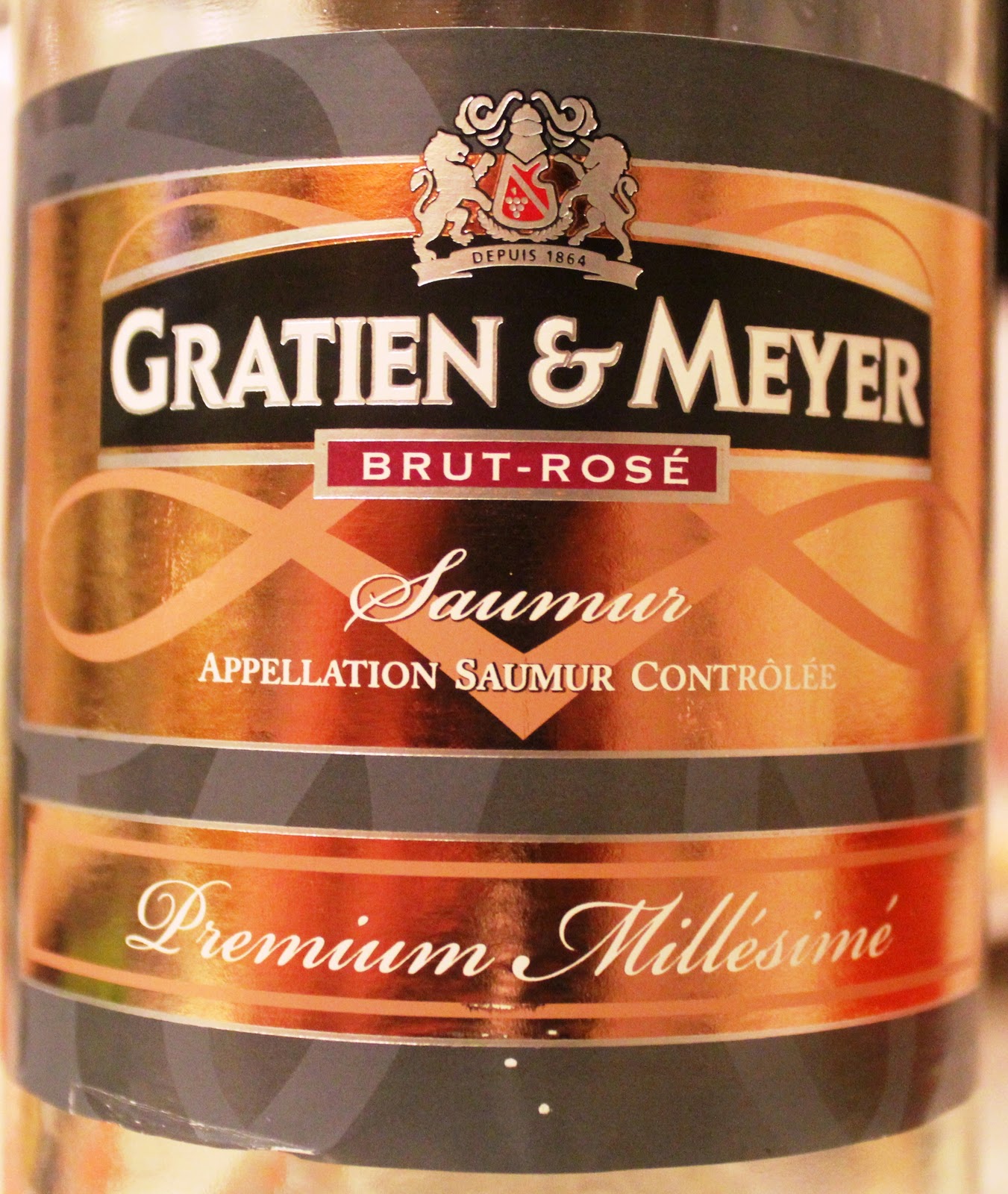
To escape the Denver heat, we enjoyed this pink French sparkler from the Loire Valley. This blend of 80% cabernet franc and 20% grolleau is extremely bubbly. It has been the only sparkler to foam out of the bottle when I've pulled the cork over the past six months. The wine is a beautiful shell pink color. I found strawberries, cranberries and flowers on the nose. Tart red fruit and bright acidity fill the mouth and it almost tastes like a very floral perfume.12% abv Purchased $17 Good
Monday, June 13, 2011
Ben's Bubbly: Patrick Bottex "La Cueille" Bugey-Cerdon Rosé (Méthode Ancéstrale)
This week Ben had his two-month doctor's appointment. Unfortunately, this appointment included his first immunization shots, and he was not a happy camper. He had a fever the first night and was ornery for a few days, but is doing better now. He is using his hands and arms more and is even holding the rattle his mom made. He also went to his first wine festival and met a handful of Colorado's winemakers. He loves showing off his big toothless smiles, but only when there are no cameras around. We are amazed that at only two months old, he knows when we are trying to take his picture, and becomes very stoic and the smiles cease. It really is quite funny, but I'm sure that we'll get some photos of his sweet bubbly face in the future. Thus, for this week's Ben's Bubbly, we picked a sparkler as sweet as our little boy.
 NV Patrick Bottex "La Cueille" Bugey-Cerdon Rosé (Méthode Ancéstral)
This grapefruit-pink sparkling wine is made from 90% Gamay and 10% Poulsard in the area between the Savoie, the Jura, Burgundy, and the Rhône in France. Different from the méthode champenoise, the méthode ancestrale technique bottles the wine before primary fermentation is complete and the wine goes through a secondary fermentation in the bottle. Unlike in Champagne, dosage is not permitted. Bright fruit (mostly ripe strawberries) dominates the nose and the palate. Quite sweet, this wine is perfect as an apertif or for a picnic on a hot summer day. More acidity could make this a more complete wine, but nonetheless it is fun and refreshing. 8% abv Purchased $14. Good/Very Good (tasted 6/10/11)

This grapefruit-pink sparkling wine is made from 90% Gamay and 10% Poulsard in the area between the Savoie, the Jura, Burgundy, and the Rhône in France. Different from the méthode champenoise, the méthode ancestrale technique bottles the wine before primary fermentation is complete and the wine goes through a secondary fermentation in the bottle. Unlike in Champagne, dosage is not permitted. Bright fruit (mostly ripe strawberries) dominates the nose and the palate. Quite sweet, this wine is perfect as an apertif or for a picnic on a hot summer day. More acidity could make this a more complete wine, but nonetheless it is fun and refreshing. 8% abv Purchased $14. Good/Very Good (tasted 6/10/11)
Wednesday, December 1, 2010
Le Beaujolais nouveau est arrivé! (two weeks ago)
The third Thursday of November every year is a wine marketer's dream. The brainchild of négociant Georges Duboeuf, this is the day that the new vintage of Beaujolais are released worldwide. Originally designed as simple wine to celebrate the harvest and to hold over locals until the better-quality wines from the region and more famous villages within were ready in the spring, these wines are now distributed global with much fanfare. Whole-berry fermented and not seeing any oak aging, Beaujolais nouveau is intended for consumption within weeks of its release. While I have not bought any the past few years, I couldn't help myself when I went to pick up some beer at a local shop.
2010 Mommessin Beaujolais Nouveau, France
As is typical with Beaujolais nouveau, this wine is dark fuschia, yet translucent in color. It has a very floral and fruity bouquet. Violets and roses are matched in intensity by fresh cranberries and red raspberries with the ever-so-slight hint of bananas. On the palate, the fresh fruit gives way to tart cranberries and unripe strawberries. A slight note of chocolate is also present causing an almost banana split-like aftertaste. This is a simple, gulpable wine that I could drink once a year. 13.5% abv Purchased $11. Average (tasted 11/27/10)
2010 Mommessin Beaujolais Nouveau, France
As is typical with Beaujolais nouveau, this wine is dark fuschia, yet translucent in color. It has a very floral and fruity bouquet. Violets and roses are matched in intensity by fresh cranberries and red raspberries with the ever-so-slight hint of bananas. On the palate, the fresh fruit gives way to tart cranberries and unripe strawberries. A slight note of chocolate is also present causing an almost banana split-like aftertaste. This is a simple, gulpable wine that I could drink once a year. 13.5% abv Purchased $11. Average (tasted 11/27/10)
Tuesday, November 30, 2010
The best wine closure in the world?
The variety of wine closures has never been so diverse. While natural cork is the traditional closure method for glass wine bottles, composite cork, synthetic corks, Zorks, glass Vino-Loks and screw caps all can be found safely keeping wine protected until you decide to pop the top and enjoy your wine. This past weekend I found a wine closure that I had never seen or even heard about before. After removing the capsule from a 2007 Olivier Leflaive Bourgogne "Les Sétilles," I was puzzled by white and black concentric rubber rings where the cork should be. Poking it with my fingers a few times did little to remove the unknown device. I decided that a corkscrew was the only way to liberate this Chardonnay. With a slight pull I had a bullet-shaped multi-material synthetic closure in my hand with "Guala Seal" embossed on the bottom.
 Perhaps better known as the AS-Elite, produced by Ardea Seal, this interesting contraption is uniquely designed with three distinct components. The AS Elite uses a polypropylene chassis to maintain rigidity inside of the thermoplastic elastomer body. The final, and most unique, component is the inert techno-polymer shield that is the only part in contact with the wine. The makers of this product go as far as claiming that it is "probably the best closure in the world." While they offer no support of this claim, I would be interested in tasting a variety of wines that have been bottled and aged with AS-Elites, cork and screw cap in the future. In addition to the interesting closure, I also was able to enjoy a very nice Chardonnay with dinner!
2007 Olivier Leflaive, Bourgogne "Les Sétilles", France
 This Chardonnay, imported by Frederick Wildman & Sons, Ltd., is from a vineyard that straddles Puligny-Montrachet and Meursault. It pours a clear, light-yellow color. On the nose, lemon, tarragon and nuts dominate with a slight hint of grassy notes. This is tart in the mouth! Lemon, pomelo, tart apple and melon lead on the forepalate but yield to a medium-length finish of chalk, nutmeg and smoke. Not overly complex, but a nice, simple entry-level white Burgundy. 13.0% abv Purchased $17. Good (tasted 11/28/10)
 Perhaps better known as the AS-Elite, produced by Ardea Seal, this interesting contraption is uniquely designed with three distinct components. The AS Elite uses a polypropylene chassis to maintain rigidity inside of the thermoplastic elastomer body. The final, and most unique, component is the inert techno-polymer shield that is the only part in contact with the wine. The makers of this product go as far as claiming that it is "probably the best closure in the world." While they offer no support of this claim, I would be interested in tasting a variety of wines that have been bottled and aged with AS-Elites, cork and screw cap in the future. In addition to the interesting closure, I also was able to enjoy a very nice Chardonnay with dinner!
2007 Olivier Leflaive, Bourgogne "Les Sétilles", France
 This Chardonnay, imported by Frederick Wildman & Sons, Ltd., is from a vineyard that straddles Puligny-Montrachet and Meursault. It pours a clear, light-yellow color. On the nose, lemon, tarragon and nuts dominate with a slight hint of grassy notes. This is tart in the mouth! Lemon, pomelo, tart apple and melon lead on the forepalate but yield to a medium-length finish of chalk, nutmeg and smoke. Not overly complex, but a nice, simple entry-level white Burgundy. 13.0% abv Purchased $17. Good (tasted 11/28/10)
Friday, October 15, 2010
You're the expert on what you like...
All too often consumers depend on scores given by The Wine Advocate, The Wine Spectator or The Wine Enthusiast for choosing which wines they purchase. How often do these consumers know if their palates match those of the reviewers? How often do high scores and even higher prices create an unconscious (or even conscious) bias in the consumers' evaluation of wine? Many people, including myself, often fall to the peer pressure of thinking a wine that is more expensive or from a more highly-regarded region is better than the wine they actually like best. Critics often argue that this bias is removed when tasting wines blind. In some ways this is true. But the palate of Robert Parker is quite different from that of John Doe. Wine critics are experts at tasting the potential of what wines may achieve in 20 years time. They too have excellent memories and can pick out certain wines in tastings that they know ought to receive high scores solely based on their geography and price point. Well, how do "regular" wine consumers compare to the experts? Which wines do normal people prefer?
To investigate this question, I assembled 13 friends, family and colleagues to taste two flights of wine. Each flight consisted of a few local Colorado Wines and two top international wines. I joined in on the tasting, but offered minimal input and did not score or formally review the wines. The first flight consisted of two Colorado Rieslings plus one from Germany and one from Australia. The second flight consisted of three Colorado Cabernet Francs, one from Italy and a Cabernet Franc-dominated blend from Bordeaux. Participants were each asked to taste, compare, discuss and rank individual preferences for each flight. Each person was asked to rank the wines (1-4 for Riesling and 1-5 for Cabernet Franc) and the rankings were summed. The wine with the lowest total score (highest average ranking) was determined the best in category.
In the Riesling flight, the tasters clearly preferred a little sweetness in their Rieslings. This is not surprising as most everyday drinkers of Riesling expect to find some residual sugar. The results for the Riesling flight are as follows:
1. Loosen Bros., Dr. L Riesling 2008, Mosel, Germany
2. Boulder Creek Winery, Gen Y Rielsing 2009, Grand Valley, Colorado
3. Settembre Cellars, Riesling 2009, Grand Valley, Colorado
4. Grosset, Polish Hill Riesling 2008, Clare Valley, Australia
The participants identified the balance of the sweetness and acidity as positives and the marked acidity and petrol characteristics as negatives. In a what many wine enthusiasts would consider a surprise, the Grosset, one of Australia's finest Rieslings, came in last and was only deemed the favorite Riesling by one taster.
On to the Cabernet Francs, the "judges" had their choice of four 100% Cabernet Francs and one 58% Cabernet Franc/42% Merlot blend. As a varietal that most participants were not used to drinking, the earthy flavors were new to a few drinkers. The results for the Cabernet Franc flight are as follow:
1. Creekside Cellars, 2007 Cabernet Franc, Grand Valley AVA, Colorado
2. Canyon Wind Cellars, 2007 Cabernet Franc, Grand Valley AVA, Colorado
3. Dithyramb Winery, 2008 Cabernet Franc, Grand Valley AVA, Colorado
4. Château Angélus, 2003, Saint-Émilion Premier grand cru classé B, France
5. Blason, 2008 Cabernet Franc, Friuli Isonzo DOC, Italy

In an exceptional surprise, the Colorado offerings took the top three places and beat out one of the top Right Bank Bordeaux from a very good year! Perhaps the Angélus and the Grosset need a few more years before their potential is met. But the average consumer is not going to buy a bottle and let it sit for 10 years before drinking. With the wines that are on the shelf and ready to drink right now, Colorado holds its own with some of the best wines and wine regions in the world. Let this be a lesson to the casual wine drinker; price and region may not be as important as you thought. Follow your palate and you might be pleasantly surprised at where you end up! You are the expert on what you like. Drink what you like and give Colorado Wine a try!
For what it is worth, my own favorites of the night were Boulder Creek's Gen Y (followed by the Polish Hill) and the Château Angélus (followed closely by the Creekside Cellars and Canyon Wind Cellars).
To investigate this question, I assembled 13 friends, family and colleagues to taste two flights of wine. Each flight consisted of a few local Colorado Wines and two top international wines. I joined in on the tasting, but offered minimal input and did not score or formally review the wines. The first flight consisted of two Colorado Rieslings plus one from Germany and one from Australia. The second flight consisted of three Colorado Cabernet Francs, one from Italy and a Cabernet Franc-dominated blend from Bordeaux. Participants were each asked to taste, compare, discuss and rank individual preferences for each flight. Each person was asked to rank the wines (1-4 for Riesling and 1-5 for Cabernet Franc) and the rankings were summed. The wine with the lowest total score (highest average ranking) was determined the best in category.
In the Riesling flight, the tasters clearly preferred a little sweetness in their Rieslings. This is not surprising as most everyday drinkers of Riesling expect to find some residual sugar. The results for the Riesling flight are as follows:
1. Loosen Bros., Dr. L Riesling 2008, Mosel, Germany
2. Boulder Creek Winery, Gen Y Rielsing 2009, Grand Valley, Colorado
3. Settembre Cellars, Riesling 2009, Grand Valley, Colorado
4. Grosset, Polish Hill Riesling 2008, Clare Valley, Australia
The participants identified the balance of the sweetness and acidity as positives and the marked acidity and petrol characteristics as negatives. In a what many wine enthusiasts would consider a surprise, the Grosset, one of Australia's finest Rieslings, came in last and was only deemed the favorite Riesling by one taster.
On to the Cabernet Francs, the "judges" had their choice of four 100% Cabernet Francs and one 58% Cabernet Franc/42% Merlot blend. As a varietal that most participants were not used to drinking, the earthy flavors were new to a few drinkers. The results for the Cabernet Franc flight are as follow:
1. Creekside Cellars, 2007 Cabernet Franc, Grand Valley AVA, Colorado
2. Canyon Wind Cellars, 2007 Cabernet Franc, Grand Valley AVA, Colorado
3. Dithyramb Winery, 2008 Cabernet Franc, Grand Valley AVA, Colorado
4. Château Angélus, 2003, Saint-Émilion Premier grand cru classé B, France
5. Blason, 2008 Cabernet Franc, Friuli Isonzo DOC, Italy

In an exceptional surprise, the Colorado offerings took the top three places and beat out one of the top Right Bank Bordeaux from a very good year! Perhaps the Angélus and the Grosset need a few more years before their potential is met. But the average consumer is not going to buy a bottle and let it sit for 10 years before drinking. With the wines that are on the shelf and ready to drink right now, Colorado holds its own with some of the best wines and wine regions in the world. Let this be a lesson to the casual wine drinker; price and region may not be as important as you thought. Follow your palate and you might be pleasantly surprised at where you end up! You are the expert on what you like. Drink what you like and give Colorado Wine a try!
For what it is worth, my own favorites of the night were Boulder Creek's Gen Y (followed by the Polish Hill) and the Château Angélus (followed closely by the Creekside Cellars and Canyon Wind Cellars).
Subscribe to:
Posts (Atom)
